
SaaS Customer Retention Playbook: From Onboarding to Expansion
Master SaaS customer retention from onboarding to expansion. Get actionable strategies, tracking frameworks, and benchmarks to reduce churn and grow CLV.
Introduction
SaaS customer retention is the highest-leverage metric most growth teams still treat as a downstream side effect rather than a primary engineering discipline. Acquisition costs across North American and European B2B SaaS markets have climbed steadily, with CAC payback periods stretching past 18 months for many mid-market products. Yet the infrastructure gap between acquisition tracking and retention measurement remains enormous: most teams can tell you exactly which ad campaign drove a signup, but cannot pinpoint the behavioral event that predicted churn 60 days before it happened. This playbook walks through each retention phase with concrete event tracking configurations, cohort thresholds, and expansion triggers you can wire directly into your analytics stack.

Structuring the Retention Lifecycle for Measurable Outcomes
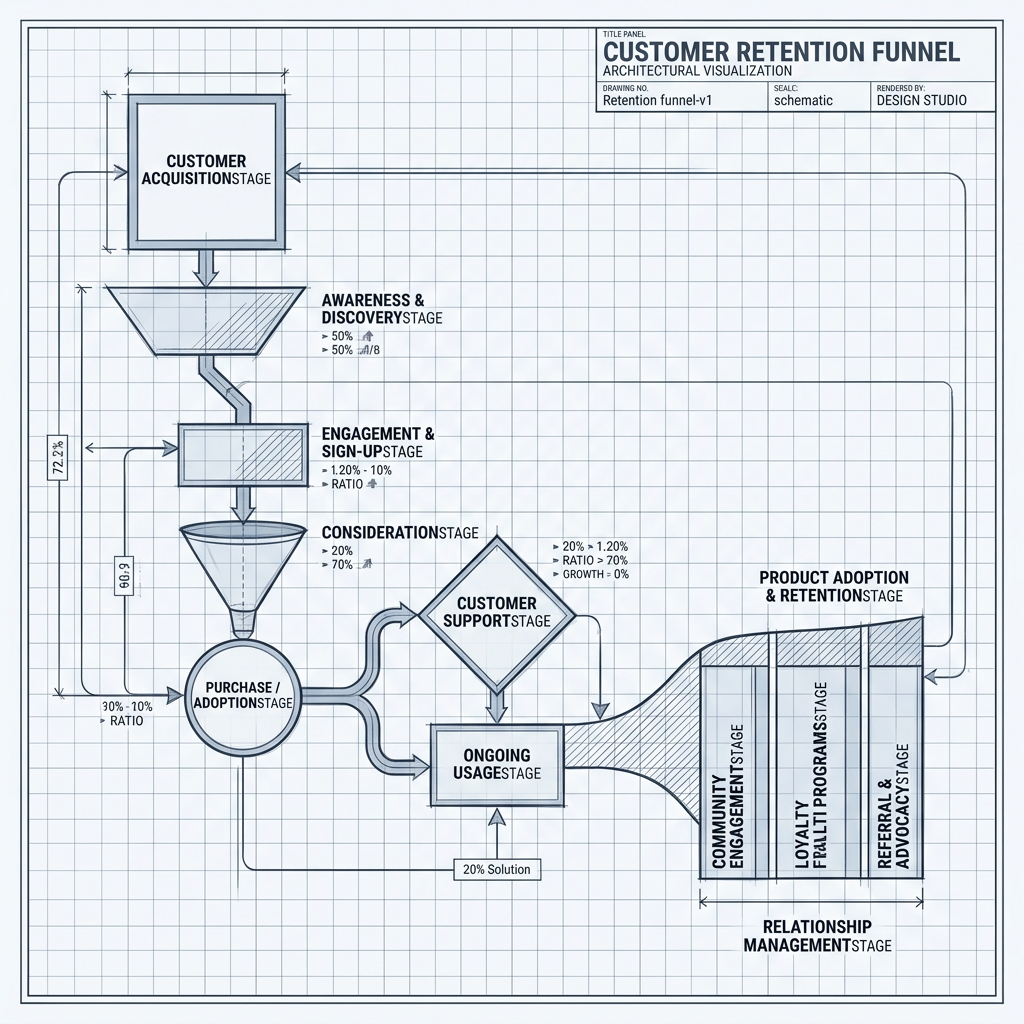
Effective customer retention strategies require decomposing the post-signup journey into discrete, measurable phases. Treating retention as a single metric (monthly or annual churn rate) obscures the operational reality: different phases demand different instrumentation, different team ownership, and different intervention types. The five phases that matter are onboarding, activation, ongoing engagement, expansion, and win-back, each with its own event taxonomy, dashboard, and risk signals.
Phase Definitions and the Events That Drive Them
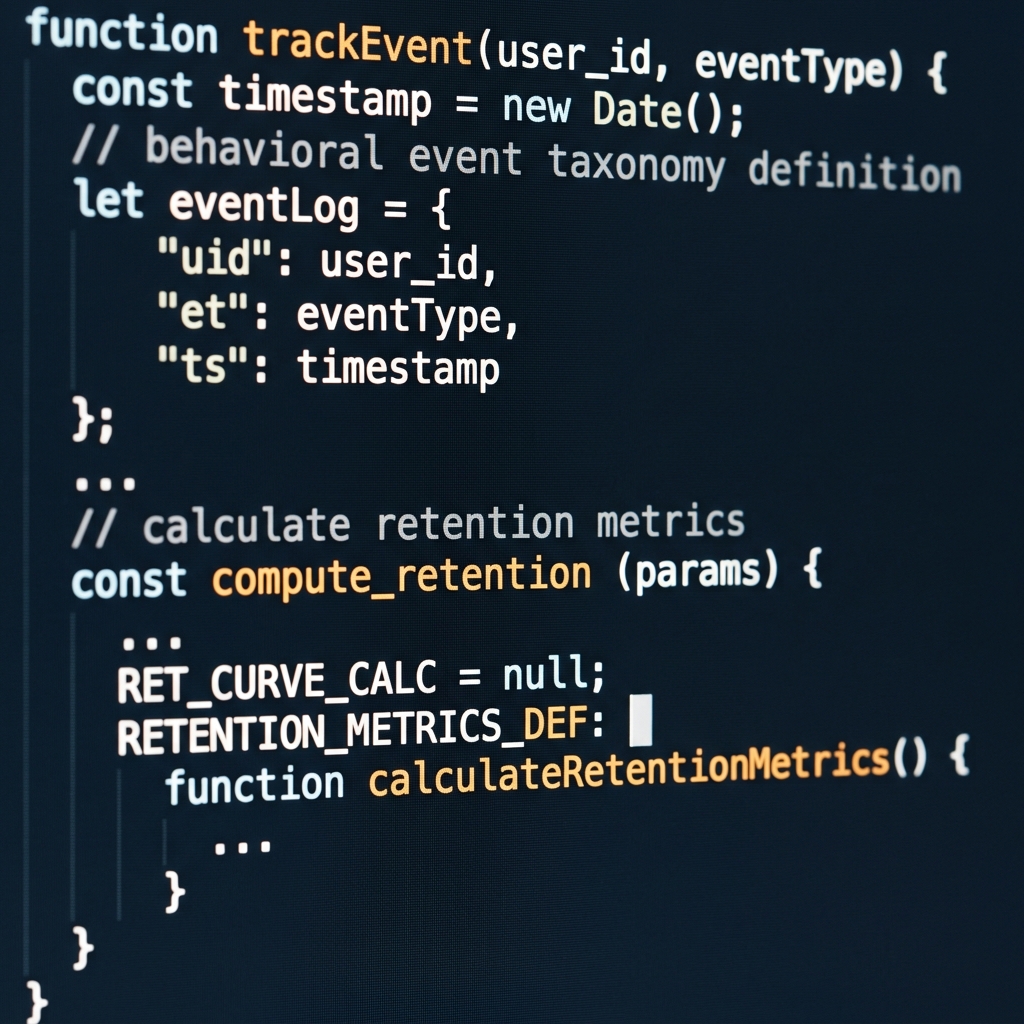
Mapping each phase to trackable behavioral events is where retention strategy becomes an engineering problem rather than a wishful-thinking exercise. Without this mapping, customer success teams are guessing. Here are the five phases and the critical events to instrument for each:
Onboarding (Day 0-7): Track account_created, first_integration_connected, invite_team_member, and first_workflow_completed to measure time-to-value.
Activation (Day 7-30): Fire events for core_feature_used_3x, dashboard_configured, and first_report_exported, marking the transition from trial user to committed user.
Engagement (Day 30-180): Monitor weekly_active_sessions, feature_breadth_score, and support_ticket_submitted to detect healthy usage patterns versus silent churn risk.
Expansion (Day 90+): Capture seat_added, plan_upgrade_viewed, and api_call_threshold_exceeded as leading indicators that a customer is ready for upsell conversations.
Win-back (Post-churn): Log cancellation_reason_submitted, reactivation_email_opened, and account_reactivated to close the feedback loop and feed learnings back into onboarding improvements.
Why Most SaaS Onboarding Retention Fails at Instrumentation
The most common failure mode is not a bad onboarding flow. It is an uninstrumented one. Teams invest in welcome emails, in-app tours, and setup wizards without attaching event tracking to each step. The result is that product managers cannot distinguish between users who completed onboarding and bounced versus users who never started. According to research on customer onboarding best practices, the first seven days determine whether a user reaches activation, and the drop-off between signup and first meaningful action is where most SaaS churn silently begins.
The fix is straightforward but requires discipline: define your activation milestone before building the onboarding sequence. For a project management tool, activation might be "created a project with 2+ tasks and invited 1 collaborator." For an analytics platform, it might be "connected a data source and viewed a report." Every screen and prompt in onboarding exists solely to move the user toward that milestone. Instrument every intermediate step so you can identify exactly where drop-off occurs and run targeted activation and referral loop experiments.
Building Your Retention Dashboard and Expansion Engine
Once the event taxonomy is live, the next challenge is surfacing the right metrics to the right team at the right cadence. A SaaS retention dashboard that works operationally is not a single screen; it is a layered system with different views for product, customer success, and revenue teams. The goal is to connect product usage analytics to revenue outcomes in a way that makes intervention timing obvious rather than speculative.
Cohort Analysis and Risk Scoring
Cohort retention analysis is the single most valuable view for detecting systemic retention problems versus individual account issues. Group users by signup week, then measure the percentage still active at 7, 14, 30, 60, and 90 days. Healthy B2B SaaS products in the US market typically see Day-30 retention between 40% and 60% for self-serve products and 70% to 85% for sales-assisted ones. If your Day-30 number falls below those thresholds, the problem is almost certainly in onboarding or activation, not in the product's long-term value proposition. Detailed guidance on running cohort analysis for retention can help configure these views in tools like Mixpanel, Amplitude, or a warehouse-native setup with dbt.
Layering a predictive churn scoring model on top of cohort data transforms passive observation into proactive outreach. A simple logistic regression model using features like days_since_last_login, feature_breadth_score, support_tickets_open, and contract_days_remaining can produce a weekly risk score for each account. Teams using this approach at TrackRaptor and similar analytics-focused organizations typically flag accounts crossing a 0.65 risk threshold for immediate customer success intervention. The 2025 SaaS benchmarks report from Maxio confirms that companies with formalized health scoring reduce logo churn by 15% to 25% compared to those relying on gut-feel escalation.
Expansion Revenue Triggers and Net Revenue Retention
Expansion revenue is the mechanism that separates SaaS companies with 90% NRR from those exceeding 120%. The behavioral signals that predict expansion readiness are distinct from engagement signals: a user logging in daily is engaged, but a user hitting API rate limits or consistently maxing out their seat count is ready to buy more. Track events like usage_limit_warning_shown, additional_seat_inquiry, and premium_feature_attempted to build an expansion pipeline that customer success and sales can act on. Top-performing B2B SaaS companies in North America target NRR above 110%, and European SaaS companies with strong customer lifetime value tracking increasingly benchmark against the same standard.
The product-led growth retention approach to expansion removes friction by surfacing upgrade prompts at the exact moment of need. When a user hits a plan limit, the upgrade path should be one click, not a "contact sales" form. Instrument the conversion funnel from limit_reached to upgrade_modal_viewed to upgrade_completed, and measure the growth loop conversion rates at each step. According to ChartMogul's analysis of net revenue retention, companies that automate expansion triggers within the product experience achieve 20% higher NRR than those relying solely on outbound sales motions.
Conclusion
SaaS churn reduction is not a single initiative; it is an instrumented system that spans onboarding event tracking, behavioral churn signal detection, cohort benchmarking, and automated expansion triggers. The companies winning the retention game in 2026 are not the ones with the best customer success scripts. They are the ones with the best retention metrics infrastructure. Start by defining your activation milestone, instrument every step of the journey, build the cohort views and risk scores that make churn visible before it happens, and wire expansion triggers directly into the product experience.
Explore TrackRaptor's full library of SaaS analytics and retention deep-dives to build the tracking infrastructure that keeps your customers and grows your revenue.
Frequently Asked Questions (FAQs)
How to improve SaaS customer retention?
Define a clear activation milestone, instrument every onboarding step with behavioral events, build cohort retention dashboards, deploy predictive churn scoring, and automate expansion triggers within the product experience.
What causes SaaS customer churn?
The primary causes are failure to reach activation during onboarding, declining engagement signaled by reduced login frequency and narrowing feature usage, unresolved support issues, and misalignment between pricing tiers and actual usage patterns.
How to calculate customer lifetime value?
Divide average revenue per account (ARPA) by monthly churn rate for a basic CLV estimate, then refine it by incorporating expansion revenue, gross margin, and discount rates for a more accurate present-value calculation.
What is a good SaaS retention rate?
Strong B2B SaaS products targeting mid-market and enterprise segments should aim for annual net revenue retention above 110% and annual gross retention above 85%, with self-serve products typically benchmarking 5 to 15 points lower.
How to identify at-risk SaaS customers?
Build a health score combining product usage frequency, feature breadth, support ticket volume, login recency, and contract timeline, then flag any account crossing a defined risk threshold for proactive customer success outreach.