
Zero-Party Data Collection Tactics for SaaS Teams
Explore proven zero-party data collection tactics for SaaS teams. Learn how to gather, store, and activate consent-first data to power personalization and privacy compliance.
Introduction
Third-party cookies are dying, privacy regulations are tightening, and SaaS teams clinging to inferred behavioural signals are watching their data quality erode in real time. Zero-party data collection offers a fundamentally different approach: instead of guessing what users want based on pageviews and click paths, you ask them directly. For SaaS teams operating under GDPR, CCPA, and the growing patchwork of global privacy laws, explicitly declared customer preferences are not just cleaner data; they are legally defensible data. The distinction between zero-party data and first-party data matters here. First-party data is passively observed (session duration, feature usage, scroll depth), while zero-party data is actively volunteered through surveys, preference centres, and onboarding flows. The SaaS teams that master this collection layer will build personalization engines their competitors cannot replicate.

Collection Methods That Actually Work in SaaS
The biggest mistake SaaS teams make with zero-party data is treating it as a single collection event. In practice, collecting declared preferences requires multiple touchpoints woven into the product experience at moments when users have both context and motivation to share information. The key is asking the right questions at the right time, not bombarding users with surveys during their first session.
Five Proven Collection Mechanisms
Each of these methods maps to a specific stage in the user lifecycle. Choosing the right one depends on what data you need and when the user is most likely to provide it willingly.
Onboarding questionnaires: Ask role, company size, and primary use case during signup. Keep it to 3-5 questions max. Completion rates drop roughly 20% for every additional question beyond five.
In-app preference centres: Let users explicitly declare notification preferences, feature interests, and communication frequency. These growth signals are gold for segmentation.
Contextual micro-surveys: Trigger a single-question survey after a user completes a key workflow. "How would you rate this feature?" or "What would you use this report for?" captures intent at the moment of highest engagement.
Interactive product quizzes: Guide users toward the right plan, feature set, or configuration through a short quiz. The answers are zero-party data; the recommendation is the value exchange.
Account settings and profile enrichment: Provide fields for job title, team size, industry, and goals. Users fill these out when they see the data reflected back in a personalized dashboard or tailored content feed.
Timing and Friction: When to Ask
The value exchange principle governs every successful zero-party data interaction. Users share information when they believe it will improve their experience. Onboarding is the highest-leverage moment because users expect configuration steps. A project management tool asking "Are you managing a software team or a marketing team?" during setup feels natural. The same question popping up mid-workflow feels intrusive. Post-activation is the second-best window. Once a user has experienced core value (sent their first campaign, built their first dashboard, completed their first analysis), they are more receptive to questions about their workflow preferences.
Avoid collecting zero-party data during high-friction moments like checkout, plan upgrades, or error states. Users in those contexts are focused on completing a task, and interrupting them with preference questions increases churn risk rather than enriching your dataset.

Storing and Activating Zero-Party Data in a Modern Stack
Collecting declared preferences is only half the problem. The other half is routing that data into systems that can actually use it for personalization, segmentation, and retention workflows. Most SaaS teams already have the infrastructure; they just have not connected the zero-party layer to it yet.
Integration Points with CDPs and Warehouses
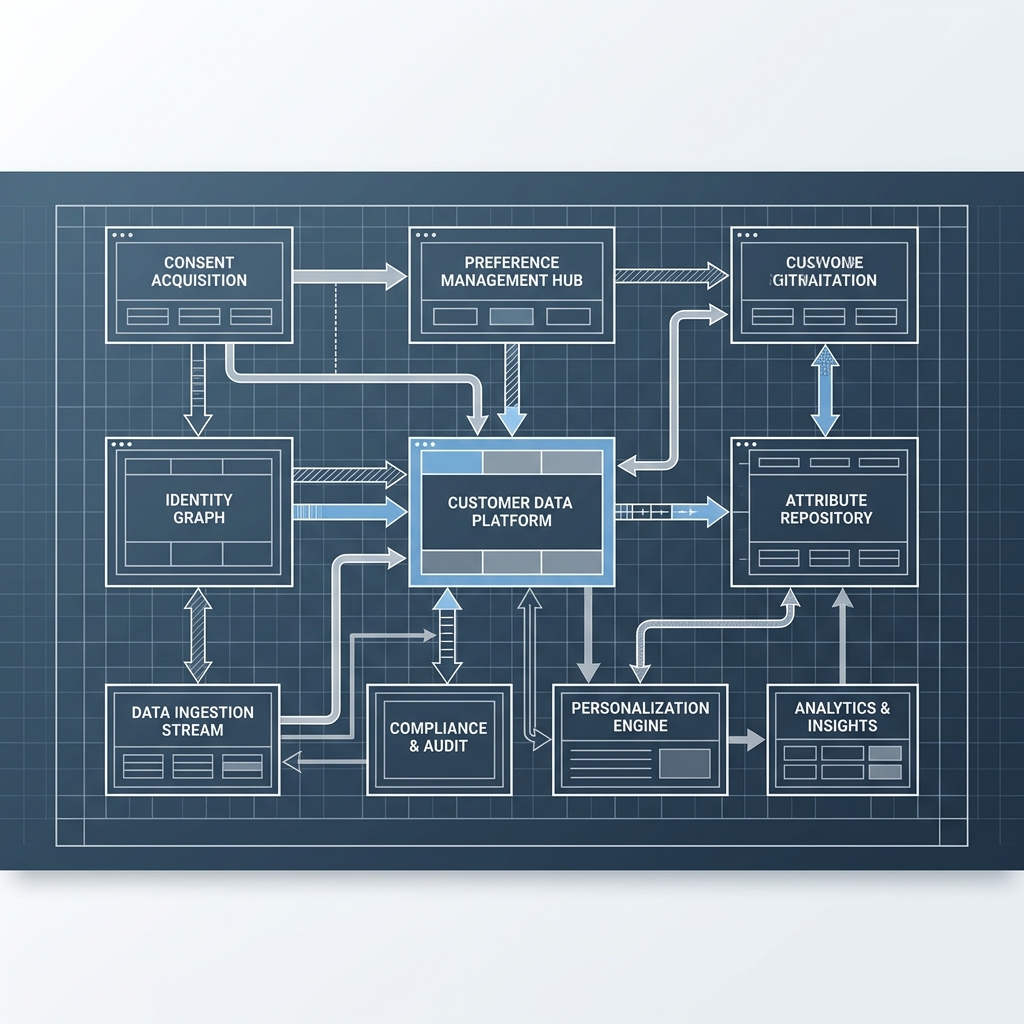
A Customer Data Platform is the natural home for zero-party data because it unifies declared preferences with behavioural signals under a single user profile. Tools like Segment, mParticle, and warehouse-native CDP alternatives can ingest survey responses and preference updates as identity calls or track events with structured properties. When a user declares "I'm a data engineer working on pipeline optimization," that property should propagate to your email platform, your in-app messaging tool, and your analytics warehouse within minutes.
For teams running a CDP with consent management capabilities, the zero-party data layer doubles as your consent record. Each declared preference carries an implicit consent signal that maps directly to GDPR's lawful basis requirements. PostHog and Amplitude can receive these properties through their respective SDKs, enabling you to build cohorts based on declared intent rather than inferred behaviour. The practical difference: instead of creating a segment called "users who visited the pricing page 3+ times" (inferred interest in upgrading), you create a segment called "users who said they want to scale their team in Q3" (declared intent).
Connecting to Personalization and Retention Workflows
Zero-party data becomes actionable when it triggers downstream workflows. A user who declares during onboarding that their goal is "reducing churn" should see churn-related templates, guides, and feature recommendations throughout their product experience. This is where reverse ETL pipelines prove their value. Tools like Hightouch or Census can sync declared preferences stored in your warehouse back into operational tools like Braze, Intercom, or HubSpot, keeping every customer-facing system aligned with what the user actually told you they care about.
Retention workflows benefit the most from this approach. When you know a user's stated goals, you can measure whether your product is helping them achieve those goals and intervene before they churn. A user who declared "I need better analytics reporting" but has not touched your reporting features in 14 days is a clear candidate for a targeted re-engagement sequence. This kind of personalization is impossible with behavioural data alone because you would never know the user's intent without them telling you.
Conclusion
Zero-party data collection gives SaaS teams a consent-first alternative to the crumbling third-party tracking ecosystem. The tactics are straightforward: embed collection into onboarding and post-activation flows, route declared preferences through your CDP or warehouse, and activate that data in personalization and retention workflows. The teams that treat zero-party data as a core product feature, not an afterthought, will build deeper customer relationships and more defensible data assets. TrackRaptor covers the full spectrum of tracking and data strategies for SaaS teams navigating this shift. Start by auditing your current onboarding flow for missed collection opportunities, then build from there.
Explore TrackRaptor for more actionable guides on SaaS tracking, analytics, and growth strategies.
Frequently Asked Questions (FAQs)
What are examples of zero-party data?
Examples include onboarding survey responses, preference center selections, product quiz answers, stated goals in account settings, and communication frequency choices that users voluntarily provide.
How does zero-party data improve personalization?
It enables SaaS teams to tailor product experiences, messaging, and recommendations based on what users explicitly said they want rather than what their click behavior implies.
How does zero-party data support privacy compliance?
Because users voluntarily share this data with clear context about how it will be used, it aligns naturally with GDPR and CCPA consent requirements, reducing legal risk compared to passively collected or third-party data.
How does zero-party data work with CDPs?
CDPs ingest declared preferences as user properties or events, unify them with behavioural data under a single profile, and syndicate the enriched profile to downstream tools like email platforms and identity resolution systems.
Which zero-party data tools work best for SaaS teams in North America?
Segment, PostHog, and event-driven platforms with strong identity call support are commonly used, often paired with reverse ETL tools like Hightouch or Census to activate declared preferences across the stack.