
Zero-Party Data Personalization: Build Trust While Scaling Growth
Learn how to use zero-party data personalization to build user trust and scale SaaS growth. Actionable strategies for collection, compliance, and activation.
Introduction
The tracking infrastructure that powered SaaS growth for the last decade is quietly collapsing. Ad blockers strip client-side scripts, Safari and Firefox restrict cross-site cookies by default, and regulations like GDPR and CCPA keep tightening the boundaries around behavioral observation. For growth teams relying on inferred signals to drive personalization, the result is a widening gap between what they think they know about users and what they actually know. Zero-party data, the information customers intentionally share through preference centers, onboarding flows, and interactive surveys, closes that gap without surveillance-style tracking. The teams that operationalize this data into real-time personalization pipelines are building a structural advantage that compounds with every user interaction.

Why Behavioral Tracking Alone Is No Longer Sufficient
For years, the default growth playbook was to observe everything, tag every click, fire every pixel, and let the analytics platform assemble a picture of user intent. That approach assumed a stable technical environment where data collection was reliable and largely uncontested. Neither assumption holds anymore, and the security implications of relying on fragile client-side observation are becoming impossible to ignore.
The Signal Degradation Problem
Client-side tracking is losing a significant percentage of its data to browser restrictions and first-party data strategy gaps. The signals that do get through carry less fidelity because third-party cookies are either blocked or on a deprecation timeline. When a personalization engine depends on observed behavior, every blocked script or suppressed cookie reduces the quality of the model. This degradation is not a temporary glitch; it reflects a structural shift in how browsers and regulators treat user-level tracking.
Browser-level blocking: Safari's ITP and Firefox's Enhanced Tracking Protection strip identifiers before analytics SDKs ever process them
Ad blocker prevalence: Approximately 30-40% of technical audiences run ad blockers that intercept tracking scripts at the network level
Consent friction: GDPR-compliant cookie banners reduce opt-in rates, leaving large segments of a user base effectively invisible to behavioral tracking
Regulatory scope creep: New state-level privacy laws in the US and evolving EU enforcement actions keep narrowing what qualifies as legitimate interest for data processing
Inferred Data Carries Inherent Risk
Beyond the technical degradation, there is a fundamental consent problem with behavioral tracking. Inferring preferences from click patterns and session behavior means building a profile that the user never explicitly agreed to. Under GDPR, the legal basis for this type of processing is increasingly fragile, especially when the inferred data feeds into automated decision-making like personalized pricing or feature gating. From a compliance and risk management perspective, every inferred attribute stored without explicit consent represents a potential liability during a regulatory audit.
The zero-party data vs behavioral tracking debate is not about abandoning observed signals entirely. It is about recognizing that inferred data is a depreciating asset in a privacy-first environment. Teams that supplement behavioral models with explicitly shared preferences build a more resilient data infrastructure that does not break every time a browser ships a new privacy update.

Collecting Zero-Party Data at Scale Without Killing UX
The biggest objection to collecting zero-party data is that it asks users to do work. Every additional form field, every preference question, every survey screen introduces friction. But the teams that succeed with this approach treat collection as a value exchange, not an interrogation. The user shares something specific, and the product immediately delivers a better, more secure experience in return.
Collection Mechanisms That Actually Work
Effective zero-party data collection is contextual and incremental. Rather than front-loading a 20-question survey during onboarding, the better approach is to distribute lightweight collection moments across the user journey where the question is relevant, and the payoff is immediate.
Onboarding flows are the most natural starting point. A SaaS product can ask three to five role-specific questions during signup that immediately shape the dashboard layout, default integrations, or suggested workflows. Tools like Typeform and custom-built onboarding wizards excel here. Preference centers, where users manage their notification cadence, content topics, or feature priorities, provide ongoing zero-party data collection touchpoints that evolve with the user's needs. Interactive quizzes tied to product analytics recommendations convert curiosity into structured data. The key principle is that every question must unlock a visible, immediate benefit for the user.
Progressive profiling is the operational pattern that makes this sustainable. Rather than asking for everything up front, contextual micro-surveys are triggered based on usage milestones. A user who just completed a third project gets asked about a primary workflow. A user who imports data from a specific source gets asked about event taxonomy requirements. This approach maintains engagement without overwhelming new users during activation.
Building the Data Pipeline Behind the Collection Layer
Collecting zero-party data is the easy part. The hard part is making it operationally useful in real time. Most teams make the mistake of storing preference data in a static profile table that gets queried once during onboarding and then ignored. For zero-party data implementation to drive actual personalization, the preference signals need to flow through the same real-time data pipelines as behavioral events.
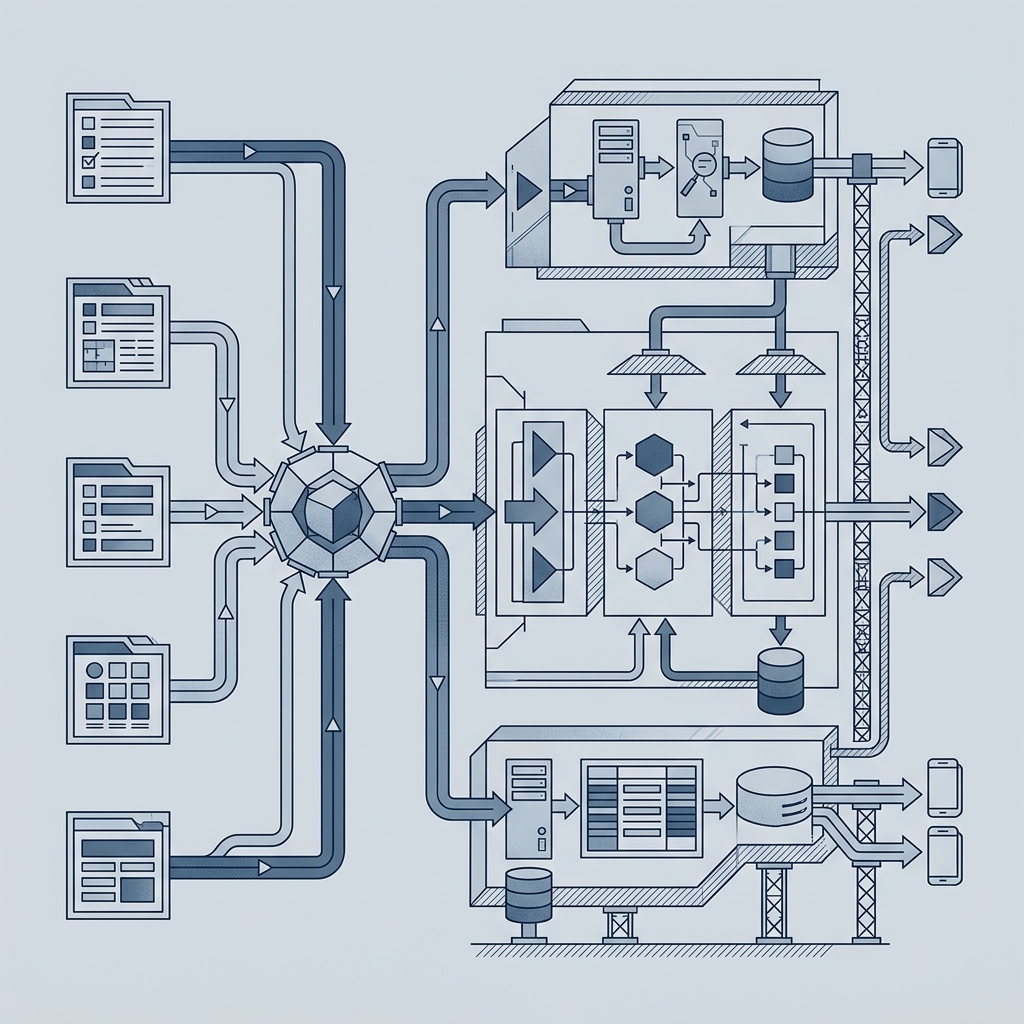
The architecture pattern that works is to treat each preference update as an event, not a static attribute. When a user changes notification preferences or updates a role in a preference center, that change fires an event into an event stream (Kafka, Kinesis, or equivalent) with the same schema governance as any other tracked action. Downstream consumers, whether a personalization engine, an email orchestration layer, or a product analytics warehouse, receive the update and adjust accordingly. This event-driven approach ensures that customer preferences propagate across every surface within seconds, not days. TrackRaptor has covered extensively how identity resolution ties these disparate signals together into a unified user profile that both engineering and growth teams can act on.
Conclusion
Zero-party data personalization is not a workaround for a broken tracking environment. It is a fundamentally better model for understanding what users actually want while maintaining strong privacy compliance and reducing regulatory risk. The teams that design intentional collection touchpoints, pipe that data through event-driven infrastructure, and measure downstream impact on activation and retention will outperform those still chasing degraded behavioral signals. Start with the onboarding flow, build the pipeline to make preferences actionable in real time, and treat every shared preference as a signal worth the same engineering rigor as a click event.
Explore TrackRaptor's zero-party data deep dives to build a collection and personalization strategy from the ground up.
Frequently Asked Questions (FAQs)
How does zero-party data improve privacy?
Zero-party data improves privacy because users intentionally and proactively share the information, eliminating the need for covert tracking methods that infer preferences without explicit consent.
What tools support zero-party data?
Tools like Typeform for interactive surveys, customer data platforms such as Segment and mParticle, and custom-built preference centers within a product all support structured zero-party data collection and activation.
How to measure zero-party data effectiveness?
Measure effectiveness by tracking conversion lift on personalized experiences compared to default ones, monitoring preference completion rates, and correlating preference-driven cohorts against retention metrics like 30-day and 90-day retention.
How is zero-party data used in growth strategies?
Growth teams use zero-party data to segment users by stated intent and preferences, enabling targeted activation and referral loops that convert faster because the messaging and product experience align with what the user explicitly asked for.
Is zero-party data CCPA compliant?
Yes, zero-party data is inherently aligned with CCPA requirements because the consumer voluntarily provides the information, though clear disclosure about how the data will be used and honoring deletion requests remain essential obligations.